










What is faux leather and how does it differ from genuine leather
“Faux leather,” “vegan leather,” PU, imitation leather, and regenerated leather are terms that can cause confusion. The materials may look similar at first glance, but their origin, structure, durability, and care requirements differ. To understand what faux leather is, you must check the actual composition, not just the marketing term.
This article compares the materials based on their label, construction, and use. The aim is not to present synthetic alternatives as wrong choices, but to help you understand what you are buying and what to expect from the product.
What is genuine leather

The origin and structure of the material
Genuine leather is obtained from animal hide that has been processed to become stable, flexible, and usable. Tanning slows down the degradation of the material and gives the leather certain color, texture, and durability characteristics.
The performance of the finished product depends on the raw material, processing method, finish, thickness, and construction. The term “genuine leather” does not guarantee quality on its own.
Types of genuine leather
The most common categories are:
-
Full-grain leather: the natural surface is largely preserved, including the material's unique variations.
-
Corrected-grain leather: may be sanded, pigmented, or coated to achieve a uniform appearance.
-
Split leather: comes from the lower layers and may receive different finishes.
-
Suede: is processed to have a velvety surface.
-
Nubuck: is usually obtained by finely sanding the outer face.
Marketing terms are not always used consistently. For each product, you should check the label, composition, and information provided by the manufacturer.
Why all genuine leathers do not look the same
Finishes can significantly change the appearance. Some leathers have visible grain and color variations, while others are smooth, pigmented, or coated for a uniform surface.
A uniform texture does not prove that the material is synthetic. Irregularities are not automatically a guarantee of quality either, as they must be analyzed together with the type of leather and the product's construction.
What faux leather is

What usually lies behind the term
“Faux leather” does not describe a standard composition. The term is frequently used for materials that imitate genuine leather and are made of a textile backing covered with a polyurethane or PVC-based layer.
The label may include terms such as PU, polyurethane, PVC, polyester, or synthetic material. Products in this category can have very different structures and quality levels.
Is the term “faux” correct?
The word “faux” can create the impression of a material with a reduced environmental impact. However, the term does not prove the origin of the raw material, biodegradability, recyclability, or the absence of synthetic polymers.
Look for concrete percentages, compositions, and certifications. The marketing term should not be interpreted on its own as a technical characteristic.
Vegan leather, PU, and PVC
“Vegan” primarily indicates that the material does not contain animal leather. It does not automatically mean that the product is natural, biodegradable, or free of plastic.
Polyurethane can provide a more flexible surface than some PVC-based materials, but quality varies depending on the formula, layer thickness, and backing. Neither PU nor PVC should be treated as a uniform category.
Bio-based materials and plant alternatives
There are materials that include fibers or residues from cactus, grapes, apples, pineapple, or mushrooms. The plant component can be combined with resins, textile backings, and synthetic polymers to achieve the necessary stability.
The presence of a plant ingredient does not mean that the entire material is biodegradable or free of plastic. Check the percentage of the plant component and the product's technical documentation.
Regenerated leather or bonded leather
Regenerated leather may contain leather fibers or scraps bonded with resins and covered with a finish layer. It is not equivalent to a full piece of genuine leather.
The composition and proportion of the components can vary. The label should clearly indicate the material's structure so that the buyer does not confuse it with full genuine leather.
Genuine leather versus faux leather

The comparison between faux and genuine leather should start with the specific product. The table below describes general trends, not rules that apply without exception.
|
Criterion |
Genuine leather |
Synthetic leather-like material |
|
Raw material |
Processed animal hide |
Usually, a textile backing and a polymer layer |
|
Appearance |
May have natural variations or a uniform finish |
Usually uniform, but may reproduce the grain |
|
Performance over time |
May develop a patina and signs of wear |
May crack, peel, or lose the outer layer |
|
Breathability |
Varies depending on the finish and construction |
Usually lower, but varies between materials |
|
Care |
Requires products compatible with the finish |
Clean according to the manufacturer's instructions |
|
Durability |
Can have a long lifespan if well made and maintained |
Varies depending on the layer, backing, and use |
|
Price |
Generally higher |
Usually more affordable |
|
Impact |
Includes animal raw material and the tanning process |
Includes, in many cases, polymers and petrochemical resources |
The cut, stitching, lining, and way of wearing can considerably change the result. A good material does not automatically compensate for poor construction.
Differences in durability and performance over time

How genuine leather ages
Well-made leather can become more supple and develop a patina, meaning gradual color and texture changes caused by use. Creases, fine scratches, and changes in high-friction areas can become part of the piece's appearance.
Patina should not be confused with severe drying, cracking, or deterioration. The lifespan depends on the type of leather, finish, thickness, cut, and care.
How synthetic materials deteriorate
The outer layer may crack, peel, or become sticky under the influence of friction, heat, and moisture. Once the coating peels off over a large area, repair can be difficult.
This behavior does not occur at the same rate in all products. Layer thickness, flexibility, textile backing, and storage conditions affect durability.
Repair and reconditioning
Genuine leather may allow, in certain situations, hydration, recoloring, stitching repair, or accessory replacement. The intervention must be adapted to the finish, as unsuitable products can stain or alter the surface.
In the case of synthetic materials, local repair results may be limited if the outer layer is extensively peeling. For a valuable piece, seek the evaluation of a specialist.
How to identify the material without damaging it

The label is the first criterion
First, check the composition. Terms such as “100% leather,” “genuine leather,” polyurethane, PVC, polyester, or synthetic material provide more useful information than appearance and smell.
If the label is ambiguous, ask the seller for an explanation. For online purchases, consult the full description, not just the product title.
Examine the back and edges
Genuine leather may have a fibrous structure on the reverse side. Synthetic materials may leave a visible regular textile backing, and cut edges may indicate the presence of multiple layers.
These areas are not always accessible in a well-lined jacket. Do not undo stitching or damage the product to check them.
Analyze the texture and pattern repetition
Printed materials may have a regularly repeating grain. Genuine leather may present variations, but modern finishes can make it very uniform.
Use texture only as a clue. It does not replace the label or product documentation.
Flexibility and recovery
Materials may form different creases when bent slightly. However, flexibility also depends on thickness, backing, and finish.
Do not stretch aggressively, scratch, or force the product to fold. These actions can damage it without providing a certain answer.
Why smell is not a reliable test
The smell may come from dyes, finishes, adhesives, packaging, or scented products. Some synthetic materials may receive fragrances that imitate the smell associated with leather.
Therefore, smell does not confirm the composition and should not be used as a main criterion.
Tests you should not use
Avoid:
-
burning the material;
-
scratching a visible area;
-
applying water to test absorption;
-
using alcohol, acetone, or other solvents;
-
applying oils to check the color.
These tests can affect both types of materials and may void the right of return.
Suede and nubuck: where do they fit

What suede is
Suede is genuine leather processed to achieve a velvety surface. The matte appearance and soft texture require different cleaning methods than smooth leather.
It should not automatically be cleaned with the same creams or solutions used for a smooth leather jacket.
What nubuck is
Nubuck is usually obtained by finely sanding the outer face of the leather. It may have a very fine and uniform texture, but it remains sensitive to moisture and stains.
Nubuck and suede have visual similarities, but the terms are not perfect synonyms.
Suede and nubuck imitations
Synthetic materials can reproduce the soft and matte surface of both. A velvety appearance does not prove a natural origin.
For identification, check the label and composition. Terms such as “suede effect” or “nubuck look” may indicate an imitation.
Which material is more suitable for a jacket

When genuine leather can be chosen
It may be suitable when you want a piece for many years, accept the necessary care, and find a cut compatible with your activities. Thickness and flexibility should be considered in relation to the season and frequency of wear.
Look for clear information about the material, finish, and care before purchasing.
When a synthetic material may be suitable
A synthetic alternative may make sense for a lower budget, for people who avoid materials of animal origin, or for a seasonal piece worn occasionally.
The choice is not automatically inferior. The quality of construction, transparency of composition, and the way the product meets the buyer's needs matter.
Why the finished product matters
A jacket should also be checked for its cut, lining, stitching, zippers, and comfort. A valuable material cannot compensate for an incorrect size or poor accessories.
At the same time, a well-made and frequently worn synthetic jacket may be more useful than a natural one that remains in the closet.
How to choose a genuine leather jacket

Check the type and thickness of the leather
Very thin leather may have a nice drape, but it is not automatically suitable for intensive use. Thicker leather may offer structure, but it must allow movement.
Choose according to the season, style, and how you intend to wear the jacket.
Try the piece in motion
Check the shoulders, sleeve length, closure, and comfort when raising your arms. Try the jacket over a top or knitwear similar to what it will be worn with.
Do not choose a very tight size counting on considerable stretching. The material's adaptability cannot correct all fit issues.
Analyze the lining and accessories
Test the zippers and snaps, check the pockets, stitching, and how the lining is attached. These components affect daily use and lifespan.
For frequently used accessories, it is useful to find out if they can be replaced or repaired.
Applying the criteria in a real selection
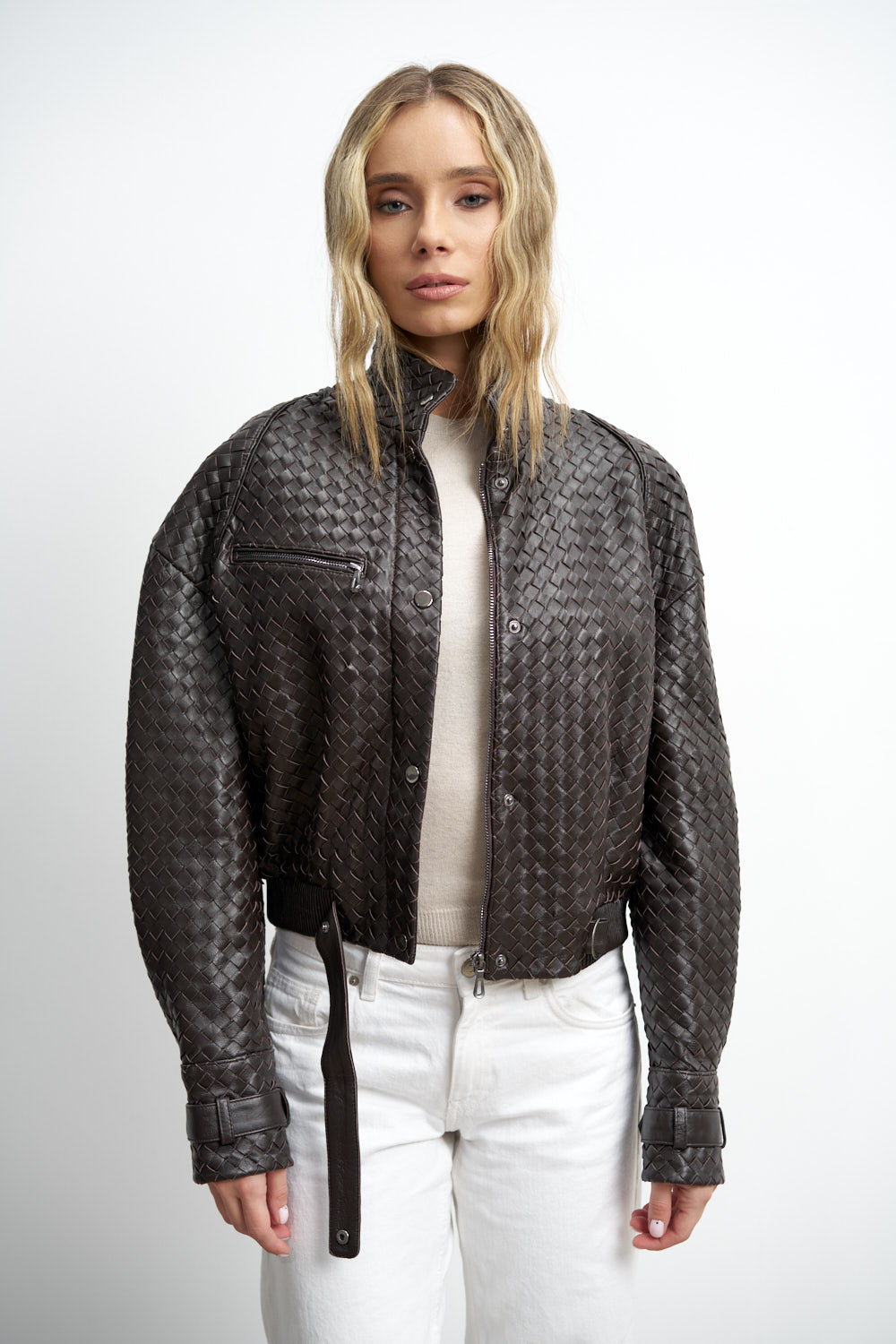
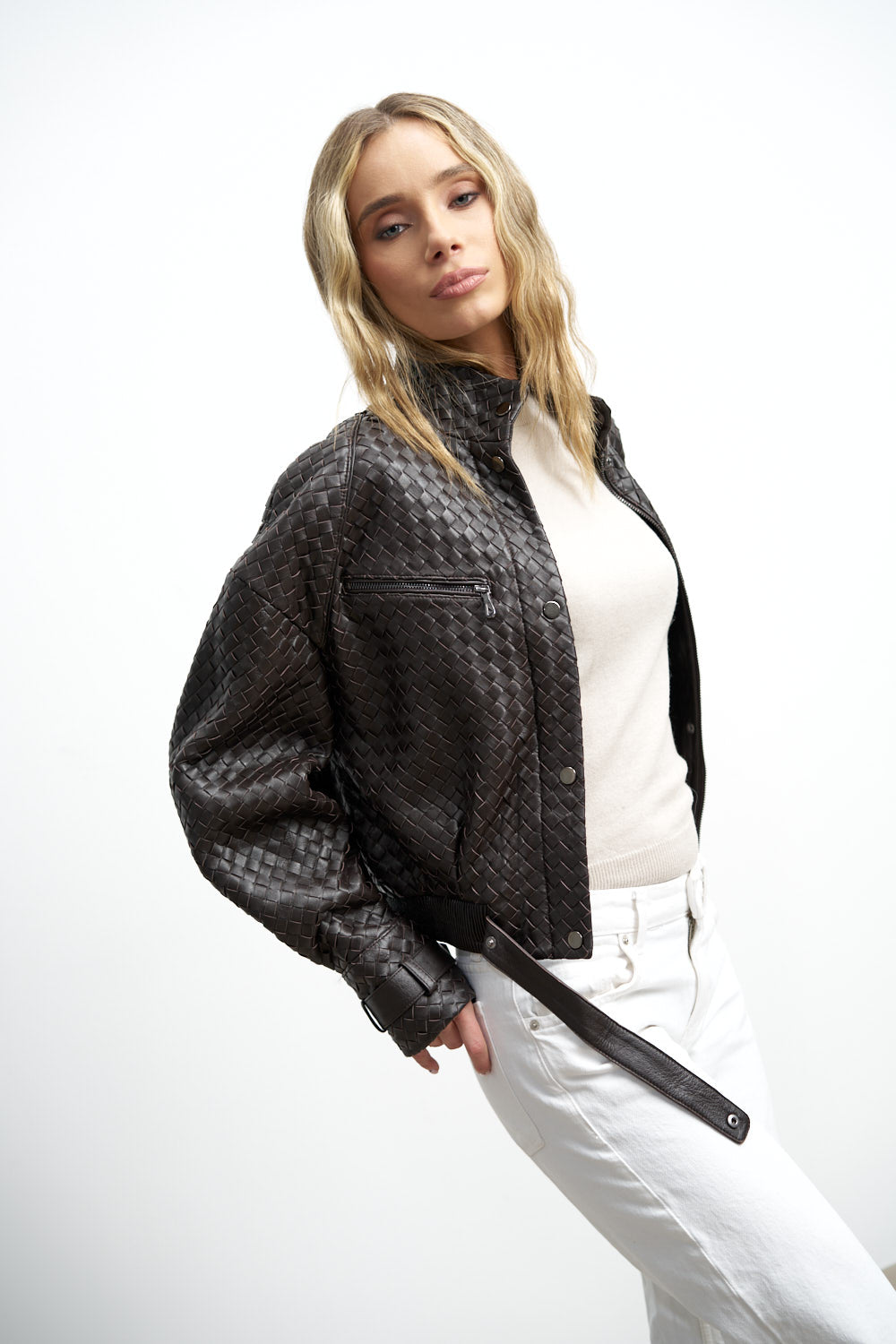
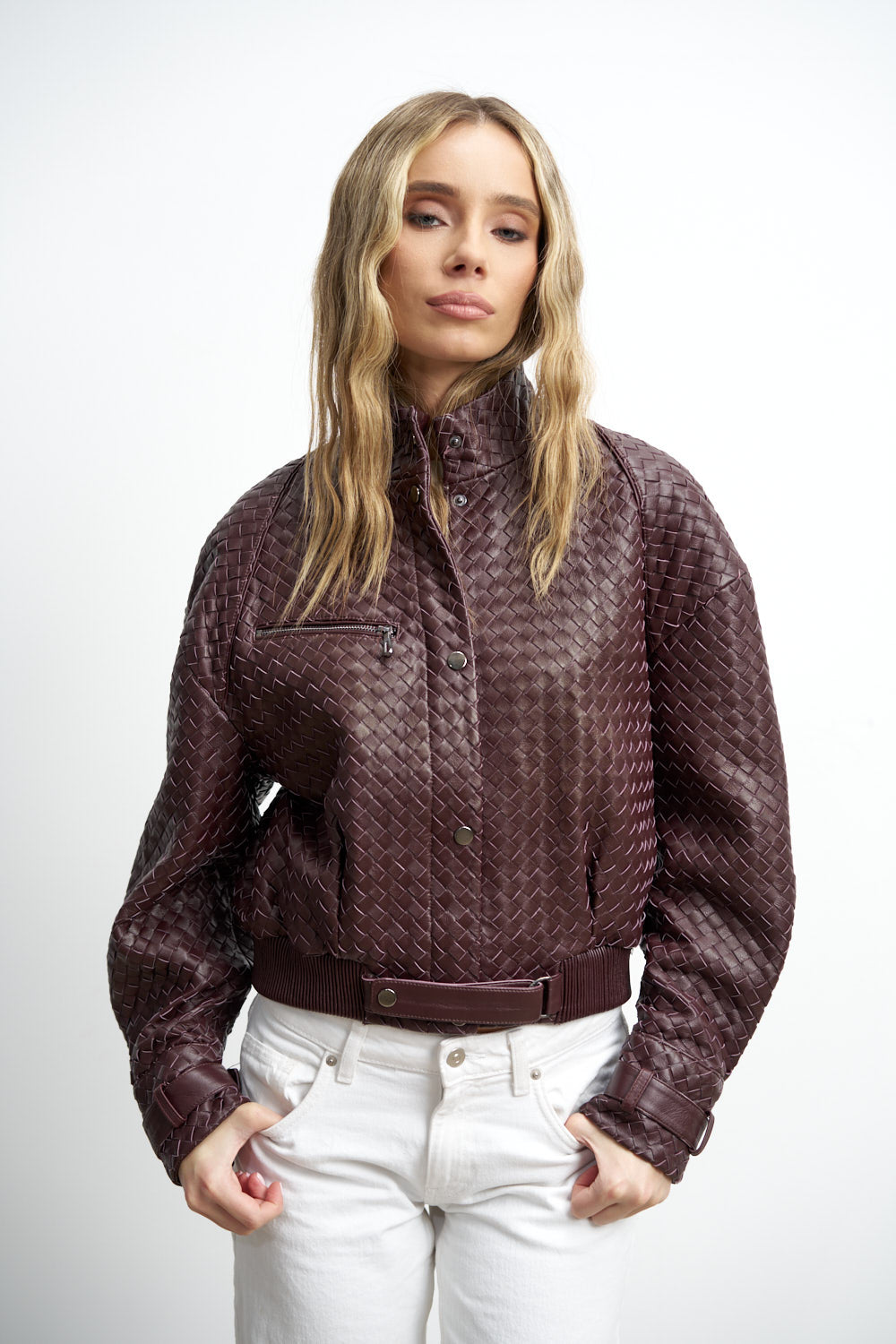
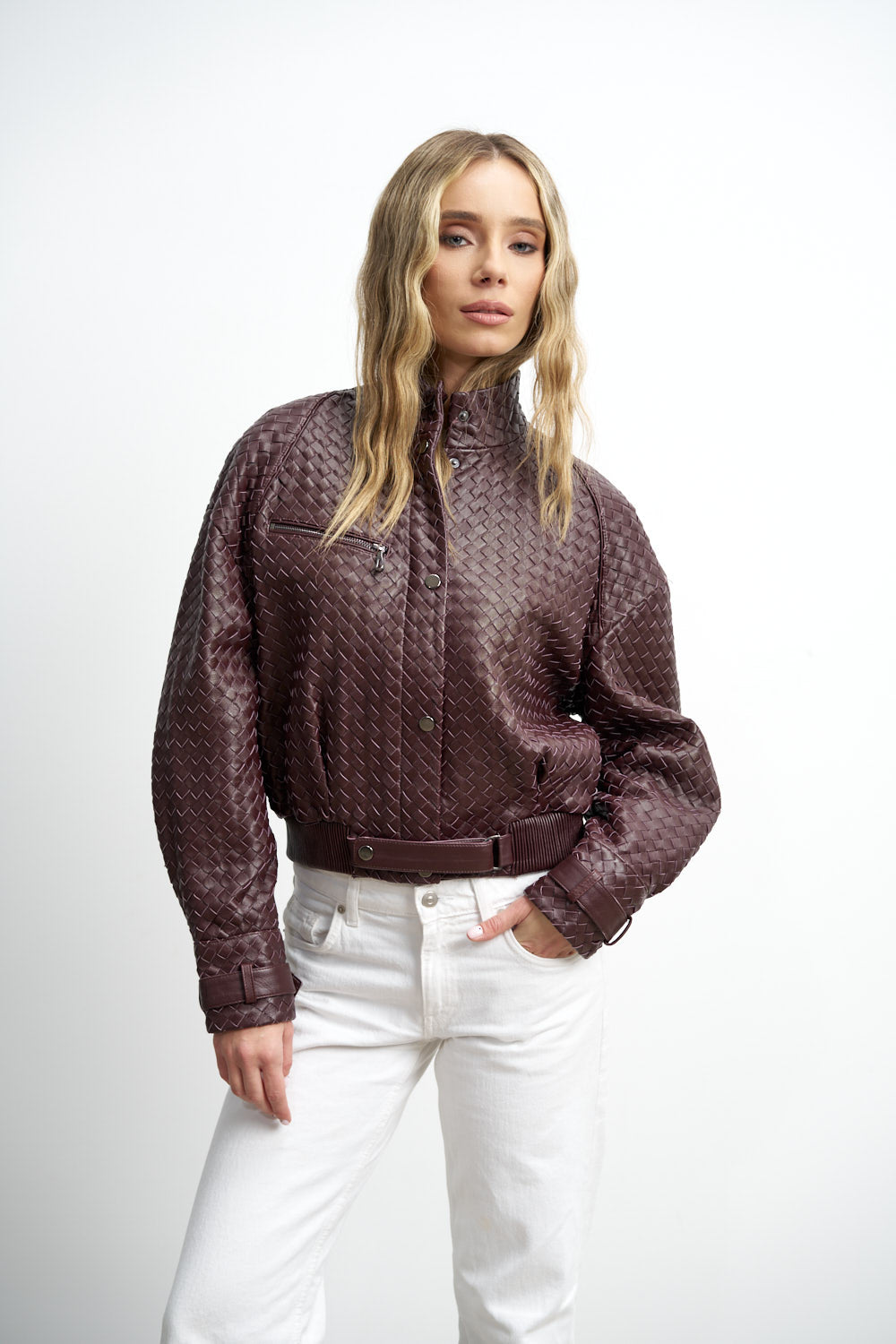
When comparing Mareus women's leather jackets, check the type of leather, flexibility, cut, and construction of each model separately. Being part of a premium category is no substitute for evaluating the actual product.
The same criteria apply to a wider selection of Mareus genuine leather items: the composition should be considered in relation to how the item is used, as well as its finish and care requirements.
Environmental impact: a comparison with no simple answer

Aspects associated with genuine leather
The assessment should include the animal-derived raw material, the resources used, and the tanning process. The impact varies depending on origin, traceability, the substances used, water consumption, and waste management.
Leather should not automatically be described as a simple byproduct without information about the analyzed supply chain.
Aspects associated with synthetic materials
Many alternatives use polymers derived from fossil resources. A structure made of multiple layers can make recycling difficult, while surface degradation can limit repair.
However, there are different formulations and processes. Not all synthetic materials have the same composition or impact.
How long it lasts matters
An item that is worn frequently and properly cared for can offer better value than one replaced after a few wears. Longevity does not eliminate the impact of the raw material and production, but it should be included in the analysis.
Buy based on need, construction, and estimated frequency of wear, not just on "natural", "vegan", or "eco-friendly" labels.
How to care for each material

Caring for genuine leather
Follow the manufacturer's instructions and remove dust with a soft cloth. Use only products compatible with the type of leather and its finish.
Avoid radiators, hair dryers, excessive moisture, and direct sunlight. For stains or significant damage, consult a specialist.
Caring for synthetic materials
Clean the surface according to the label, using a soft cloth and the recommended products. Do not use solvents, alcohol, abrasive sponges, or creams intended for genuine leather.
Protect the material from intense heat and persistent moisture. Before applying a solution, test it according to the manufacturer's instructions in an inconspicuous area.
Storage
Keep the jacket on a wide hanger suitable for its weight. Leave enough space between garments to prevent creasing and surfaces sticking together.
Do not store the item damp and avoid airtight plastic for long periods. If protection is necessary, use a breathable cover.
Common mistakes when comparing genuine leather with eco-leather

Avoid the following assumptions:
-
any uniform surface is synthetic;
-
the smell proves the composition;
-
"vegan" means biodegradable;
-
"natural" means impact-free;
-
all PU or PVC materials are identical;
-
100% genuine leather guarantees a well-made jacket;
-
fire, water, or solvent tests are reliable;
-
the outer material is the only important criterion;
-
all products in the same category are cared for identically.
Conclusion

Eco-leather is, in most cases, a synthetic material that imitates genuine leather, often made of PU or PVC applied over a textile backing. However, the name does not indicate a standard composition, and the label should be checked for each product.
Genuine leather and synthetic alternatives have advantages, limitations, and different forms of impact. The choice should be made based on composition, the construction of the finished product, budget, personal reasons, frequency of wear, and willingness to provide care.